Tesla Starts Mass Producing Its Humanoid Robots in California
The automaker has begun building Optimus on a dedicated line in Fremont, aiming for high-volume output by training the machines on a massive scale.
By Samir Nasser ·
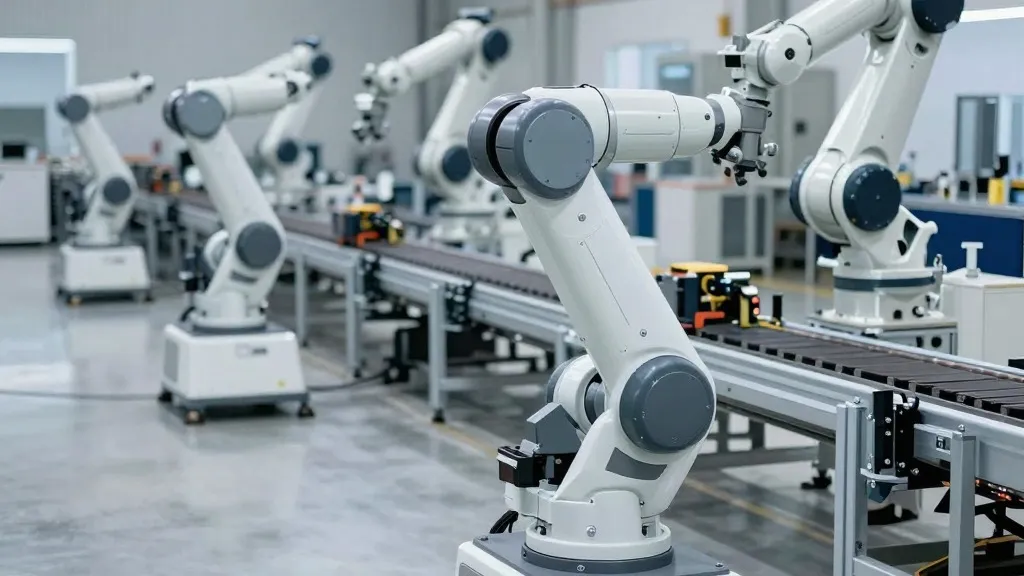
For many people, the idea of a robot performing daily tasks is still science fiction. That is starting to change. Tesla has officially started building its Optimus humanoid robot on a high volume production line. This means the company is moving from making prototypes to creating actual products that it intends to sell to other businesses. The shift suggests that these machines are becoming a tangible part of the future workplace, rather than just a concept on a screen.
The move is significant because it changes how we think about manufacturing robots. Instead of building them one by one in a lab, Tesla is using an assembly line. This approach is designed to lower costs and increase the number of units available. It marks a transition from experimental development to commercial reality. For consumers and businesses alike, this signals that humanoid robots are entering a new phase of maturity and availability.
The production line is located in Tesla's Fremont factory in California. This space was previously used to build the Model S and Model X vehicles. Tesla cleared out the old car line in just 46 days to make room for the new robot production. The setup is designed to handle a massive annual capacity of one million units. Most of the necessary equipment is already in place, and the company expects output to rise to about 20,000 robots per week as the process ramps up.
Elon Musk, the company's CEO, described the growth pattern on an earnings call. He compared it to an S curve, noting that the initial increase will be slow but will accelerate over time. The team is currently working on improving the robot's artificial intelligence, mechanical design, and reliability. Musk expects these improvements to be finished by the end of next year. At that point, Tesla plans to start delivering the robots to outside companies for jobs that are dangerous, repetitive, or require round the clock attention.
A key challenge is how the robots learn. Tesla's cars get smarter by sharing data from millions of vehicles on the road. Optimus does not have a large fleet yet to do the same. To solve this, Tesla is creating an Optimus Academy. This will be a facility where 10,000 to 20,000 robots practice various tasks. They will feed their learning data back into the system to improve the next version of the robot. Every unit coming off the Fremont line will contribute to this training process.
The hardware is also getting an upgrade. Tesla plans to install its AI5 chip in the robots next year. This chip will allow the machines to handle more complex thinking and decision making. Musk said a new video will be released within one or two months. It will show the robot completing tasks using artificial intelligence rather than following preprogrammed moves. He noted that many competing demonstrations only use scripted routines, which may not work well in real world environments.
The supply chain is also preparing for this shift. In September, Tesla certified three partners for mass production of Optimus components. These partners are Tuopu, Joyson, and Sanhua. A much larger factory for robots is also being built at Giga Texas. Recent drone footage shows the steel frame of that plant nearing completion. The long term goal for that facility is to produce 10 million robots a year.
Cost is another important factor. Tesla executives said that the production costs for Optimus are trending toward the expected manufacturing cost of the Cybercab. This suggests the robot is designed for high volume production from the start. However, the hands remain the most difficult part of the design. That is where much of the current engineering effort is focused. Solving this issue will be crucial for the robot to perform a wide range of physical tasks effectively.
Source: Teslarati